
Real-life picture guide · South Africa
Pet Insurance Made Simple for Families
Follow one South African family from choosing protection to a vet visit and a claim, with every insurance word translated into plain language.
This guide explains the journey to a family. An adult must compare, consent to and buy the policy; children can help care for the pet and understand the simple steps.
Get quote & buy
Reviewed 12 August 2026 by AfriPolicyCover Editorial · General education, not personal financial advice

The one-sentence answer
Pet insurance helps an adult pay eligible vet costs when a covered event happens.
It does not promise to pay every bill. The policy says which events count, how long the family must wait, how much the provider may pay and which part stays with the pet owner.
Four boxes to remember
Put every vet cost into the right box
A plan name can sound broad. These four boxes make the actual promise easier to see.
Accident
A sudden eligible injury, such as a cut, bite or broken bone.
Ask: what event and treatment limits apply?Illness
An eligible sickness covered after the applicable waiting period.
Ask: which earlier or related conditions are excluded?Everyday care
Vaccines, check-ups and parasite care need a named routine benefit.
Ask: is it included, optional or fully excluded?Not automatic
Waiting-period care, earlier conditions and elective treatment may not qualify.
Ask: what will the family still pay?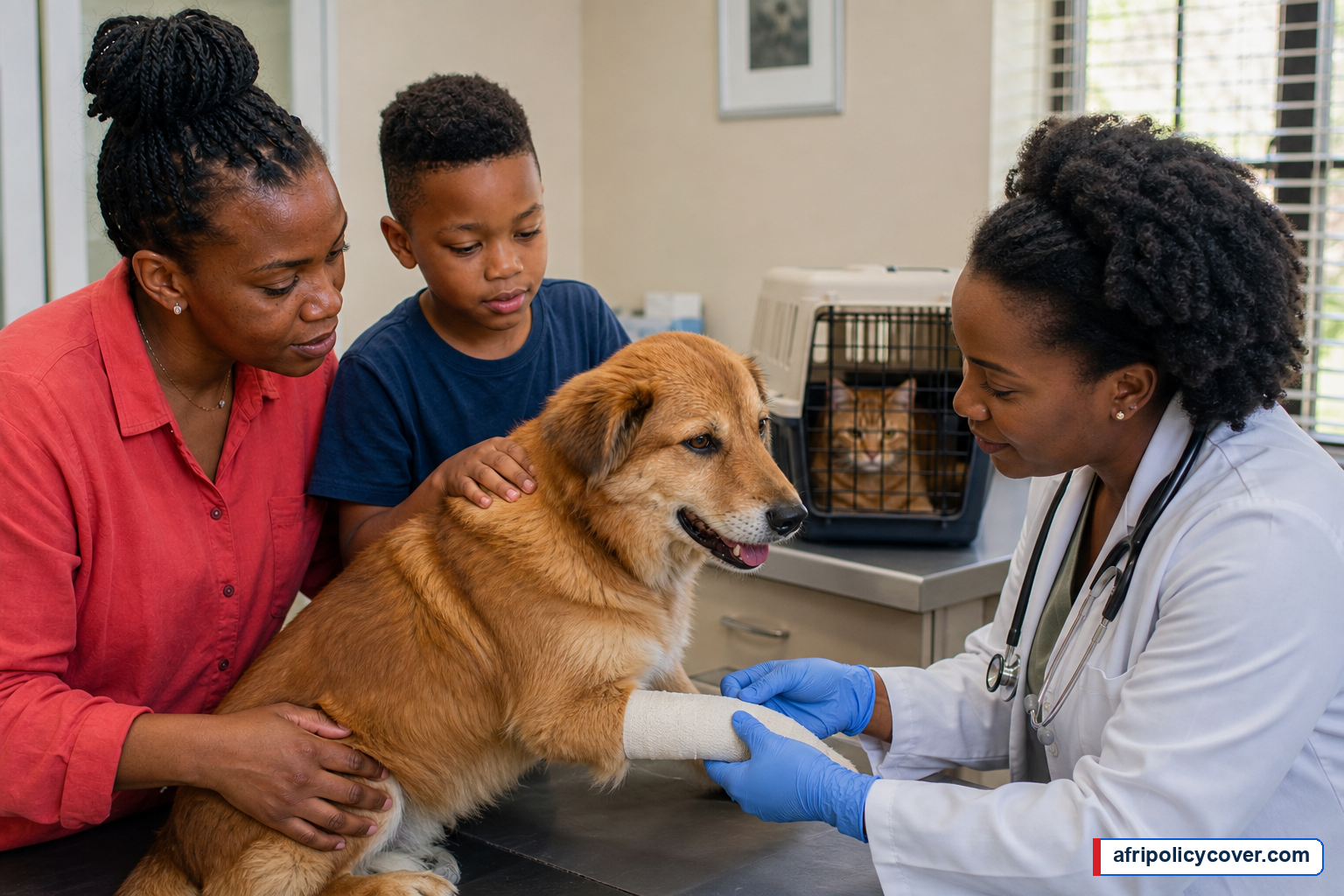
When the pet needs a vet
Help first. Check the policy route as soon as it is practical.
Easy version: the vet looks after the pet. The adult looks after the policy steps.
- Go to appropriate care.Use a registered veterinary professional or facility.
- Tell the provider.Follow emergency notice and pre-authorisation rules.
- Keep the story.Diagnosis, notes, invoice and medicine explain what happened.
Side-by-side check
Compare the promise, not only the monthly price
Read each row against the accepted policy wording. “Comprehensive” is not a standard list shared by every provider.
| Part | Simple meaning | Adult check |
|---|---|---|
| Accident | A sudden eligible injury, such as a broken bone after a fall. | Find the injury and emergency limits. |
| Illness | An eligible sickness that starts under the policy rules after applicable waiting periods. | Find waiting and earlier-condition rules. |
| Everyday care | Vaccinations, parasite treatment and check-ups are covered only when expressly included. | Look for a named routine benefit. |
| Owner payment | The family may still pay an excess, co-payment, excluded item or amount above a limit. | Add excess, co-payment and limits. |
| Not automatic | Earlier conditions, waiting-period treatment and elective care are commonly limited or excluded. | Read the exclusion wording exactly. |
After the vet visit
A good claim tells one clear story with evidence
Easy version: what happened, what the vet did, what it cost and which rule applies.
- 1
Help the pet
Use an appropriate registered veterinary professional or facility; an emergency is about care first.
- 2
Tell the provider
The adult follows the policy notification and authorisation rules as soon as practical.
- 3
Keep the evidence
Save the diagnosis, treatment notes, itemised invoice, prescription and proof of payment.
- 4
Send the claim
The adult completes the provider form and keeps the claim reference and copies.
- 5
Read the answer
Match the paid and unpaid items to the excess, limit, exclusion and complaint route in the policy.

The claim folder
What each document explains
| Record | What it explains | Keep in mind |
|---|---|---|
| Policy schedule | Shows the insured pet, chosen plan, start date, limits and owner payments. | Keep the accepted version, not only the quote. |
| Vet clinical notes | Explain the signs, diagnosis, tests and treatment provided to the pet. | Keep a legible copy with the claim reference. |
| Itemised invoice | Separates consultation, tests, medicine, procedures and other charges. | Keep a legible copy with the claim reference. |
| Proof of payment | May be needed where the adult pays first and requests reimbursement. | Keep a legible copy with the claim reference. |
| Claim decision | Should show what was accepted, what was not paid and which policy term was used. | Use the internal complaint route if the reason is unclear. |
Kid words · grown-up words
Six insurance words in one breath each
The adult still reads the complete definition in the policy. These short meanings make the first conversation easier.
- Premium
- The amount the adult pays to keep the policy active.
- Excess
- The part of an eligible claim the family still pays under the policy rule.
- Waiting period
- A set time after cover starts when some claims cannot qualify yet.
- Annual limit
- The most the policy may pay during one policy year.
- Pre-existing condition
- A condition or related sign that fits the policy's definition from before cover started.
- Claim
- The adult's request for the provider to assess and pay an eligible cost.
Adult next step
Turn the family lesson into a careful shortlist
Lebo's family chooses accident-and-illness cover for their dog, Bongi. Months later Bongi hurts a paw. The vet treats him, Lebo's mother keeps the diagnosis and itemised invoice, and she submits the claim. The provider applies the policy excess and benefit limit before paying the eligible balance.
Five things to fix before Buy
- 1Name the pet and record its age, species, breed and health history correctly.
- 2Choose whether protection is for accidents only or also eligible illnesses.
- 3Find the waiting period, annual limit, smaller benefit limits and owner payment.
- 4Read what pre-existing condition means before the policy begins.
- 5Know whether the adult pays the vet first and then claims reimbursement.
What cover can help with
- Can make an eligible emergency vet bill easier for a household to manage.
- Lets the adult choose a simpler accident plan or broader illness protection.
- Creates a repeatable family routine for records and claims.
What it cannot promise
- It does not make every vet bill free.
- Earlier conditions, waiting periods and excluded care can prevent payment.
- Limits, excesses and co-payments can leave part of the bill with the owner.
Trust and verification
Adults should verify the provider and the vet
AfriPolicyCover is an independent comparison publisher. Confirm the current provider wording, financial-services status, registered veterinary route and complaint process before acting.
Keep learning
Five useful adult follow-ups
Questions answered
Frequently asked questions
Can a child buy pet insurance?
No. A responsible adult compares, consents to and buys the policy. A child can learn the steps and help care for the pet without sharing personal or payment information.
Does pet insurance pay every vet bill?
No. The event must be covered and the policy can apply waiting periods, exclusions, limits, excesses and co-payments.
What is the easiest plan to understand?
Accident-only cover is usually narrower, but easy does not mean suitable. The adult should compare the injury definition, limit, excess and emergency route.
What happens if the pet was already sick?
The provider applies its pre-existing-condition definition. Earlier signs, veterinary advice or related treatment may affect cover even when diagnosis came later.
Who sends the claim?
The adult policyholder follows the provider's process. The vet may supply clinical information, and some providers may offer an approved direct-payment route.
Where can the adult compare plans?
Use the AfriPolicyCover pet-insurance hub to compare maintained price, scope, claim-support and online-service records before reading the current provider wording.